Two pages can rank in the same position — three and four on page one — and pull completely different click-through rates. Position isn't the only thing deciding who gets the click. The title tag is doing a lot of that work, and most title tags are written to satisfy a keyword rather than a human deciding which of ten blue links is worth their time.
This isn't about tricks or clickbait. A misleading title gets the click and loses the visitor immediately, which helps nobody. These are six formulas built around giving the searcher a real, specific reason to prefer your result, without gaming anything.
1. The Number and Specificity Formula
Numbers work because they set a concrete expectation. A title without a number implies an unknown amount of content; a title with a number tells the reader exactly what they're committing to before they click.
"7 Signs Your Water Heater Needs Replacing, Not Repairing"
This beats something like "Water Heater Replacement Guide" because it promises something scannable and specific — seven distinct signs — rather than a general guide of unknown length and depth. The number also implies the content has been organized with the reader in mind instead of being one long unstructured block of text.
This formula loses effectiveness if the number doesn't match reality. A title promising "10 Ways" that delivers three padded points and seven filler restatements damages trust and increases bounce rate, which eventually shows up as a ranking problem too, since Google does pick up on weak engagement over time.
2. The Direct Answer Formula
Some searches are a question with a specific answer sitting behind them. The searcher wants that answer, not a narrative buildup toward it.
"How Much Does a Website Redesign Cost? (2026 Pricing Breakdown)"
Compare that to a vaguer alternative like "Website Redesign Costs and What to Know." The first version directly mirrors the question in the searcher's head and adds a concrete promise — an actual pricing breakdown — not just general commentary around the topic. The year in parentheses also signals the content is current, which matters more for pricing and cost-related queries than for evergreen topics.
This formula depends on the page actually delivering the direct answer near the top, not three screens down. A title that promises directness and a page that doesn't follow through creates the search intent mismatch problem that quietly kills conversions even when rankings hold.
3. The Comparison Formula
Comparison searches signal someone actively deciding between options, which makes the title an opportunity to acknowledge that decision directly rather than pretending they've already chosen.
"WordPress vs. Squarespace for Small Business Websites (2026)"
A title like this outperforms something generic like "Website Builder Comparison Guide" because it names the actual two things the searcher is choosing between. If someone is searching "WordPress vs. Squarespace," a title using both exact names signals a precise match before they even click, versus a vaguer title that could be about anything.
This formula only works honestly if the page actually compares the named options in a structured, useful way, rather than favoring one so heavily that the comparison framing was misleading to begin with.
4. The Problem-First Formula
Sometimes the strongest hook isn't a number or a question format. It's naming the exact frustration the searcher already has, which signals immediately that the page understands their situation.
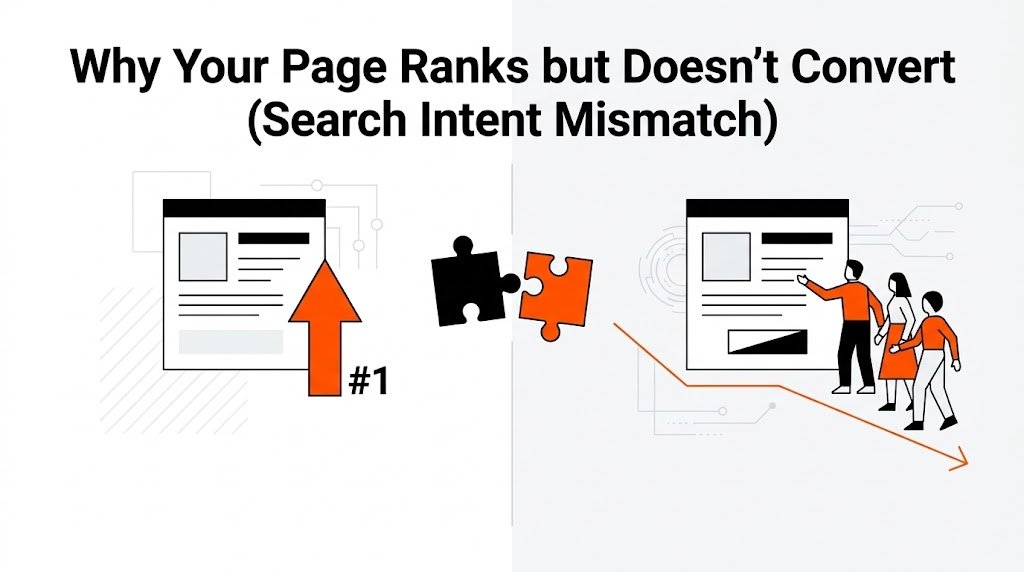
"Why Your Page Ranks but Doesn't Convert"
This works because it names a specific, recognizable frustration rather than describing a topic abstractly. Someone experiencing this exact problem — decent rankings, no conversions — recognizes their own situation in the title immediately, which is a stronger click driver than a more neutral title like "Understanding Search Intent." It's also the exact pattern we diagnose in our guide to why a page ranks well but doesn't convert.
The risk with this formula is being too vague about the problem. "Why Your SEO Isn't Working" is broad enough to mean almost anything, which weakens the specificity that makes this formula effective in the first place.
5. The Location and Specificity Formula, for Local Pages
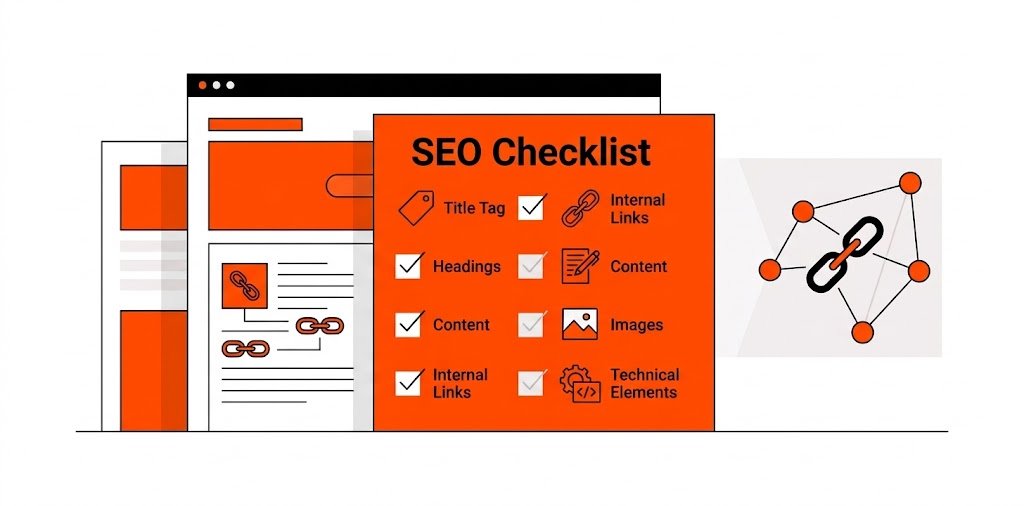
Local searches often include an implicit filter — the searcher already knows they want something nearby — and a title that confirms this quickly builds relevance faster than a generic title that makes them guess. This is the same approach used as a live example on our own Houston plumbing web design work, and broken down in more detail in the on-page SEO checklist.
"Emergency Plumber in Houston, Available 24/7"
This beats something like "Plumbing Services | Houston" because it adds a concrete differentiator — availability — alongside the location match. Two competing results might both mention Houston, but only one signals urgency-readiness, which matters specifically for searches happening during an active problem.
6. The Honest Limitation Formula
Occasionally the strongest title is one that manages expectations rather than oversells them, particularly for topics where nuance matters more than a bold claim.
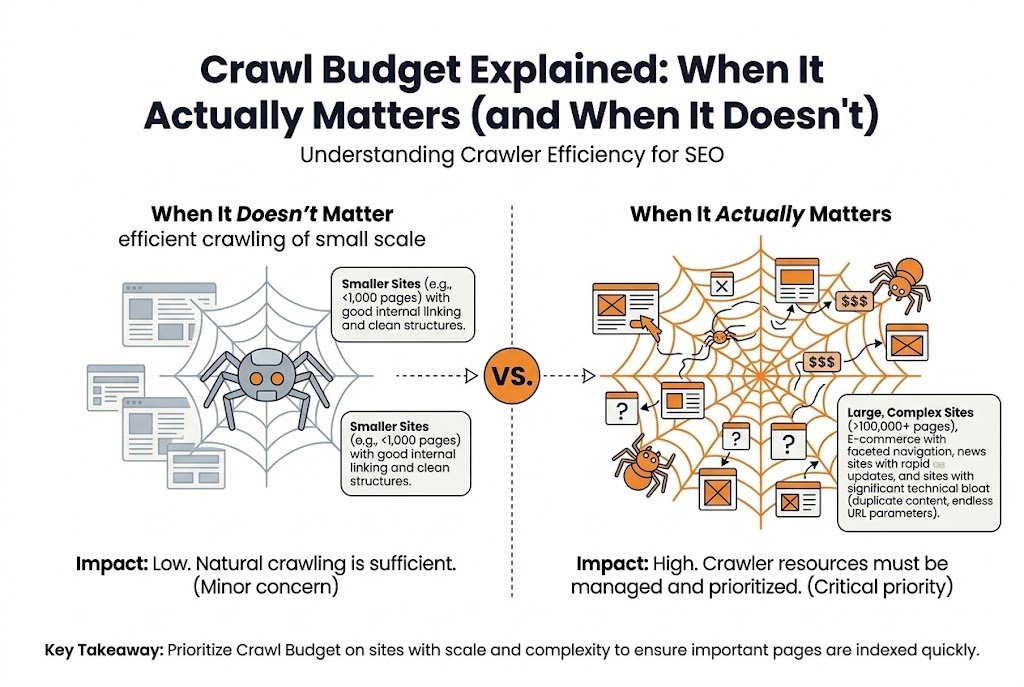
"Crawl Budget Explained: When It Actually Matters (and When It Doesn't)"
This title works because it signals the content won't oversimplify the topic into a universal rule. Someone who has heard conflicting advice about crawl budget — some sources treating it as critical, others dismissing it entirely — is drawn to a title that promises to sort out when each view actually applies.
Formulas That Look Fine but Usually Underperform
A few common patterns show up constantly and rarely pull strong click-through rates, worth naming directly rather than just listing what works.
Generic service plus location with nothing else added — "SEO Company Houston" — tells the searcher almost nothing beyond confirming the keyword match. It's not wrong; it's just competing against nine other results doing the exact same thing, with no differentiator to break the tie.
Vague superlatives without support — "The Best Guide to SEO You'll Ever Read" — make a claim the title itself can't back up, and searchers have generally learned to distrust titles that oversell this way without any specific detail underneath the claim.
Keyword strings with no sentence structure — "SEO Services Houston Affordable SEO Company Houston TX" — read as obviously written for a search engine rather than a person, and modern search users notice the difference between a title written for them and one written around them.
Testing Titles Without Guessing
Search Console's performance report shows impressions and click-through rate by page, which makes it possible to compare a page's actual CTR against the average for its ranking position. A page sitting in position four with a click-through rate well below what position four typically pulls is a reasonable candidate for a title rewrite, since the traffic potential is already there and just isn't converting into clicks. These are the same diagnostics we work through in a technical SEO audit.
After changing a title, it's worth waiting a few weeks before judging results, since click-through rate on a single page can fluctuate day to day based on unrelated factors — seasonal search volume, competitor changes, SERP feature shifts. A short one-week comparison window on a lower-traffic page often isn't enough data to draw a reliable conclusion.
The Underlying Principle Behind All of These
Every formula above does the same basic thing: it replaces vague relevance with a specific, concrete reason to click. A number, a direct answer, a named comparison, a recognizable problem, a clear differentiator — each one gives the searcher something more to go on than a title that simply confirms the keyword is present.
None of this replaces matching the page's actual content to what the title promises. A compelling title paired with a page that doesn't deliver on it produces a quick bounce, which undermines the exact engagement signals that would otherwise help the page hold or improve its position over time. The formula gets the click. The page still has to earn the visit.
FAQ
Does the title tag itself directly affect rankings?
Not directly in most cases. Title tags mainly influence click-through rate, which is a behavioral signal Google can factor in over time rather than a direct ranking input. A better title won't override weak content or poor relevance, but it can help a page capture more of the traffic its current ranking already makes available.
How long should a title tag be?
Roughly 50 to 60 characters is the usual safe range before Google truncates it in search results, though the exact cutoff varies based on pixel width rather than character count alone. It's worth checking how a title actually displays in a search result rather than relying strictly on a character limit.
Should every page have a number in the title?
No. Numbers work well for list-style or comparison content, but forcing a number into a page that isn't structured as a list can feel arbitrary and doesn't help if the content doesn't back it up. The formula should match what the page actually delivers.
Can I test different titles without hurting my ranking?
Generally yes, as long as the new title still accurately reflects the page's content and target keyword. Titles can be adjusted and re-tested over time, and Search Console's performance data will show whether a change improved or hurt click-through rate for that page.
Is click-through rate more important than ranking position?
They work together rather than competing. A high ranking with a weak title still limits total clicks, while a strong title on a page ranking poorly has little traffic to work with in the first place. Improving both matters, but fixing a mismatched title is often the faster win on a page that's already ranking reasonably well.
If you'd rather have a team apply these patterns across your pages, that's what our on-page SEO service is built for — starting with the titles that are actually costing you clicks.
Related Guides
More from the same part of the roadmap — same category first, newest first.